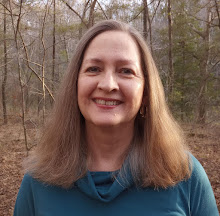
Jennifer Horne grew up in Little Rock, Arkansas, and has lived in Alabama since 1986. The author of a book of poems, Bottle Tree (WordTech Publications, 2010), and a poetry chapbook, Miss Betty’s School of Dance (bluestocking press, 1997), she is also the editor of Working the Dirt: An Anthology of Southern Poets (NewSouth Books, 2003) and co-editor, with Wendy Reed, of All Out of Faith: Southern Women on Spirituality (University of Alabama Press, 2006). She has worked as a teacher in elementary, high school, college, international, and prison classrooms, and as a journal, magazine, and book editor, and has received fellowships from the Alabama State Council on the Arts and the Seaside Institute. She holds a BA in the Humanities from Hendrix College, and an MA in English, an MFA in Creative Writing, and an MA in Community Counseling, all from the University of Alabama. She is married to Don Noble, a writer, editor, and literary interviewer.

Monday, February 4, 2013

On Being Born Across


I recently heard from my friend Gretchen McCullough, who teaches at the American University in Cairo, that her partner, Mohamed Metwalli, was choosing some American poets to translate for an Egyptian journal called Wasli (which, I'm told, means "link"). Mohamed will be translating some of my work for the March issue, I’m delighted and honored to report. Can’t wait to see what those southern Bottle Tree poems look like in Arabic!

Mohamed and Gretchen collaborated on a translation of three of her stories for a bi-lingual edition published by AFAQ Bookshop in Cairo as Three Stories from Cairo (http://www.gretchenmccullough.com/). Gretchen will have a collection of her stories in English out from AFAQ soon.

Mohamed himself has compiled (with translator Mohamed Enani) “an anthology of the off-beat new Egyptian poets” titled Angry Voices. My home-state press, the University of Arkansas Press, is the publisher. http://www.uapress.com/titles/sp03/enani_angryvox.html

Back in the early 90s, my husband and I lived in Bucharest for a year when he worked as a Fulbrighter at the University of Bucharest, and a few of my poems were translated into Romanian then. I never saw the translations, but I did write a poem playing with idea of translation and being translated. The word itself comes from the past participle of the Latin word for transfer, whose roots are in words meaning “across” and “to bear.”

Here’s that poem:

Himalayas

--for Taina Duțescu-Coliban


Translating Shakespeare
from Barbu's Romanian
back into a different English,
you showed us, at the symposium,

what translations can do.
No surprise your name
means mystery, Taina.
Now you too have been translated.

The BBC World Service
announced two Romanian climbers
missing in the mountains
the day of our going-away party.

Your colleagues hid it well.
We didn't learn until later
more important departures than ours
disturbed the air.

They were angry at you for leaving,
for taking yourself away--
your spirit, your intelligent,
excitable sense of play.

You were the one
who always made it through, alive.
The Cold War was over;
why crave snow?

Bucharest was a city
of pale survivors
when we arrived,
city of minds freshly cut

with memories of want.
I learned slowly
the cruelties of Ceausescu:
nights without heat,

walls that listened,
light curbed to a 40 watt-bulb,
the gradual crumbling
of "the Paris of the East."

All so he could build
his grand People's Palace,
a crazy man's version
of Versailles.

In the end,
no grim Securitate agent
came for you. A Sherpa guide?
I'd like to think so:

a mountain village, a new tongue.
Better think of that
instead of bitter air,
a night without stars, the hours long.

I see you on a white mountainside,
light, heat, and food running out.
You are laughing at this absurdity,
speaking in the dark.


(uncredited photo of Taina Duțescu-Coliban from alpinet.org)

Tuesday, October 16, 2012

One of my favorite mis-hearings is "partial post"

For about a year and a half now, I’ve been—off and on—working on a blog post about the April 27, 2011 tornado that hit Tuscaloosa. The writing includes such things as volunteering, survivor guilt, Christian music over the p.a. system at my local Winn Dixie, why I decided to join the local Unitarian-Universalist congregation, third-person versus first-person narration, shock and whether you know when you’re in it, civic responsibility, dogs, my inability to operate a chainsaw, and where I belong. It has finally dawned on me (I am a slow learner) that I may have an essay, a meditation, a series of journal entries, or an open letter to the universe, but it is not a blog post if it takes you a year and a half to write it.


So, in the spirit of working with what I have as I have it, here’s a short poem that has some of what the essay-thing might eventually find its way to in prose:


After the Tornado

I would have passed her by
in the grocery store
without a second glance,
and she me.

The round blonde,
the skinny black girl,
two worlds,
worlds apart.

But standing in line
to volunteer
after the bad storm,
we spoke.

She was six months sober;
I knew her mother’s thrift store
down on Crescent Ridge,
now destroyed.

Leaving, she grabbed my hand:
“I love you!”
And, not thinking first,
I said, “I love you, too.”


                                    (Drawing by Josephine Anderson)

Friday, August 10, 2012

At the Hawk's Well

I’m back from a trip to Ireland, one I’ve made a number of times now, to attend the Yeats International Summer School in Sligo. I like a lot of Yeats’ poems and find him a fascinating poet to study, both for the changes he went through as a poet and the times he lived through and responded to in his work. The daily lectures help me think about the writing of poetry, and seminar discussions are heaven: ten people in a room gathered to talk and ponder and think, sparking off each other as we dig into poems and find what lies beneath the surface.


In addition to lectures and seminars, there are readings by some of the best contemporary poets in Ireland, among them, this year, Bernard O’Donoghue, Peter Fallon, Eamon Grennan, and the Nobel Prize–winning Seamus Heaney. In Sligo, I’ve heard Heaney read three times. The first was through the generosity of a poet I met there, Joan McBreen, who in a kind of fairy-godmother way obtained unobtainable tickets for me and my husband in 2004. We’d come up by bus from Galway to attend the launch of her poetry CD, The Long Light on the Land. We had no way home that night—the last bus would leave before the reading ended—but we decided to stay, regardless, and trust to luck for what happened next. What happened next was that her sister, who lived not too far from Galway, drove us home, and not just to her town for a taxi, but to our doorstep. I’ll never forget all that generosity.

The second time was in 2009, at the 50th anniversary of the founding of the Yeats School; I got a copy of The Spirit Level signed then, having picked it up in the Winding Stair bookstore in Dublin thinking I’d like to have a book to get signed after the reading.

This summer my husband was with me again, and the Hawk’s Well Theatre in Sligo was packed full. Among the poems Heaney read were “In the Attic,” a favorite of mine since I read it in the New Yorker a few years ago, “Postscript,” “The Railway Children,” “Two Lorries,” and poems about his mother from the “Clearances” sequence.

The affection for him coming from the audience was something you could feel, something he could feel, surely. At the end of the reading, he joked, “I probably should’ve stopped you clapping, but it seemed so natural.” I’d been telling someone the day before one of my favorite poetry stories, about Pasternak reading to a packed house in Russia, reciting all of his poems from memory, and how when he’d paused in the middle of one, losing a line, the words had come up to him from the audience, all of whom knew his poems by heart. It felt like that, there in the Hawk’s Well.

As he’d done the first time I heard him read in Sligo, Heaney said he didn’t think he’d read “Digging,” perhaps his most famous poem. A great groan went up from the audience, many of them local people, who clearly wanted this greatest hit. After another couple of poems, he said that perhaps he could do “Digging,” and paused to gather it into his mind.

He began with the opening words, “Between my finger and my thumb / the squat pen rests; snug as a gun,” continuing on with that amazing, magical sleight-of-hand he has that moves effortlessly between time periods, to the part of the poem where he remembers his grandfather cutting turf. “Once I . . .” he began, and paused. “Once I . . .”—and I found myself in a Pasternak moment, shouting “carried him milk”! Several others called out the line as well. I think for some members of the audience it was distressing to see the great poet not reciting his own poem perfectly, but for me it was a moment of just being human, which is what we love Heaney’s poetry for anyway, opening us up to our full humanity. He continued, “Once I carried him milk in a bottle / Corked sloppily with paper” and through to the end.

After the reading he agreed to sign books, and I’m told he kept on for an hour and a half before walking out into the cool, damp, peat-smelling Sligo night.

As we left the theatre, my mind was drifting back to another night, a wet and windy night in Oxford, England, where I was on a junior-year study abroad program in 1980-81. I had a brown three-speed Raleigh bicycle that I rode everywhere. It had a light that ran off the movement of the tires, and I’d bought pre-Velcro pants clips, metal with a black plastic covering, to keep my pants legs from getting caught in the chain. Heaney was reading, and I knew enough about poetry then to know I’d better get myself to it, rain or not, tired or not, several miles away or not. He read in a theatre-like classroom with rows of seats spreading upwards. I remember fluorescent lights, a not-full house, and then the way he commanded the room, bringing his energy to bear to captivate us all for an hour. That was the first time I heard “Digging,” before he had read it so many more times he felt perhaps that was enough. I remember leaving the reading alone, exhilarated, the rain having stopped, streetlights shining on wet leaves and dark pavement. I wanted to ride and ride and ride, and not to go to sleep that night, just to keep feeling so alive.

Thursday, July 19, 2012

Mediterranean Poetry

Good news this morning! My poem sequence “Evil Eye” is now posted in the e-journal Mediterranean Poetry.


Here’s my “artist’s statement” about the poems:

The sequence is composed of thirteen poems in the voices of women historically connected to Greece; it is my hope and intention that the poems stand on their own, but I have included notes at the end to fill in some of the details related to these women. Having traveled a great deal in Greece, I found myself wanting to write a series of poems set there. My husband, a Greek-American, suggested that I might want to write something having to do with Greek women. After thinking about it for some time, I began exploring resources on women from different places and periods in Greek history. By writing persona poems in these women’s voices, imagining the details of their lives, I felt that I was able to write about women’s issues in specific, grounded ways, and that many of the concerns of these women--economic and social freedom, marriage, religion, power--related to my own life as a southern woman.

The concept of the evil eye occurs in a number of countries. In Greece, it grows out of the idea that the rare, the beautiful, the lucky attract envy, and that this envy creates a negative energy that can cause bad luck. In many cases, the person with the “evil eye” may not even be aware of it but simply bring it on through envy of others’ happiness or good fortune. In relation to this collection of poems, each of the women portrayed has either experienced some bad fortune or is in a position to do so.

Of course, if you believe in the evil eye, I should be cautious about beginning a post with "Good news this morning"!


Wednesday, June 6, 2012

Road Trips


First trip:
When I get back from Jackson, I’m a little sad. Not because it wasn’t a perfect trip, because it was amazingly, surprisingly, perfect, but because the Parlor Market and the Mayflower Café are in Jackson, and I am in Tuscaloosa, and three hours stretches the limits of how far you can drive for a meal. The two restaurants are in the same block, and just a short walk from the Hilton Garden Inn downtown, where we stayed. They couldn’t be more different, and yet they are both the authentic item, each marvelous in its own way. On a long-planned and finally achieved literary pilgrimage to Eudora Welty’s house (in spring in Alabama, as in spring in England, people still long to go on pilgrimages), we ate at the Parlor Market in the evening. In honor of the pilgrimage, I ordered a “Eudora” cocktail, made of Hendricks Gin and celery soda. It sounds weird but is delicious. Our waiter brought us each a tiny sweet potato biscuit with sorghum butter to put on it, then a tiny amuse bouche of Brie, apple, pecan, basil, mint, and maybe some other inspired ingredient. I had fresh gazpacho, rabbit meatballs, and grouper, and left happy. The next day, after a wonderful tour of the Eudora Welty house and gardens (our guide, Kim Cooper, told us afterwards it was her first tour, which was hard to believe, she did so well and knew so much), we decided we had time to eat at the Mayflower Café before leaving town. Where the Parlor Market is low lighting and dark wood and cozy tables, local and organic and inventive southern food and extremely well-informed staff, the Mayflower beckons with green and red neon, the classic diner layout of booths down one wall, tables in the middle, and a soda fountain on the other side, with the counter up front. There’s a slightly faded poster of the Beatles on the wall, and it feels, happily, as though nothing has changed in seventy years. We both went for varieties of crab salad and saved room for pie, the best lemon icebox I’ve ever had. Our waitress (I know, server, but for this place waitress seems right) promised it was the best, and though the coconut and chocolate were surely exemplary, I think we chose right.

Second trip:
My dad’s birthday and Father’s Day were on the horizon, so I decided to drive home to Little Rock for a visit. My default route takes me all the way across Mississippi on Highway 82; I cross the river at Greenville on the new bridge that looks from a distance like a huge four-masted sailing ship, then head up 65 across southeast Arkansas. Driving, I think of my friend Gene Dobson, who grew up in Watson, Arkansas, and attended Henderson College with my mother; I met him and his daughter, Rachel, who’s my age, when I moved to Tuscaloosa. Gene died a few years ago, but he’s always in my thoughts as I pass the Watson turn-off. For years I’ve driven past the Varner and Cummins prisons thinking about Damien Echols, one of the so-called West Memphis Three, imprisoned there; this time I drove past knowing he’d been released on a plea deal (the complicated details are explained here: http://wm3.org/). When we’d drive on that road when I was a child, I always shivered at the signs that said “Penitentiary Area: Beware of Hitchhikers,” as though a bogey man was about to jump from the side of the road at any minute as we sailed by in the big yellow Lincoln.

I’ve just finished Jo McDougall’s fine memoir Daddy’s Money, about growing up on the “Grand Prairie” of southeast Arkansas on a rice farm, about how past and present mingle and speak to one another, not always graciously, and how memories, though nourishing in their own way, are not enough to live on: we must make our peace with it and move forward. I thought of Jo McDougall, her prose and poetry, as I drove past Dumas.

I get a little bored with the same route over and over again and had thought to try a Little Rock-Memphis-Winona-Tuscaloosa route on the way home so as to have more interstate than highway travel. Something kept telling me to go the old way, though, and even though I don’t understand intuition I try to pay attention to it. Lo and behold, I had car trouble heading home, just past Lake Village, ten or fifteen miles from that beautiful bridge. The car had a kind of spell, losing power and sending out warning signals, so I stopped at a defunct gas station in the Y where the road goes south and east toward Mississippi, or directly south toward Eudora, Arkansas (and yes, I’ve always wondered about that name). Here’s a neat link about, surprise, Eudora’s early Jewish community.

Sitting in the old gas station, plate glass broken out of its building, the pumps long gone, studying the car manual to decipher its codes, I suddenly remembered that this was the meeting point when my parents would bring me to visit with my best friend Kelly Holland, whose family had moved to Mississippi, Clinton I believe, after fourth grade. I don’t know how long this went on, a few years I think, but we visited back and forth at each other’s homes, always meeting at that gas station, our halfway spot. Kelly’s mother had beautiful long hair that she brushed out at night and put up in a bun in the morning, and I remember watching “Brian’s Song” with Kelly and trying not to cry. I thought about what understanding and accommodating parents we had, helping us to remain friends as long as we needed to.

Past and present, layering and mingling.

I went back to Rick’s Express Citgo station in Lake Village to try to find a mechanic on a Sunday morning at 11 a.m. It turned out to be busy enough with non-churchgoers, and a dad-type man overheard my question to the girls at the cash register. He dashed out the door, yelling “Wayne! Wayne!” at a retreating pick-up, but Wayne—the local mechanic, as it turned out—did not hear him, so he called him and let me use his phone to talk. As I waited for Wayne to come back to the gas station, I learned from the local coffee drinkers about which casinos they frequented and preferred; one man, a wild-eyed, inflated-looking fellow with a large, protruding navel, claimed to have been a bootlegger in Little Rock for some time and had an astounding memory of wins, losses, amounts ventured and gained, and which machines he’d had good or bad luck with. When Wayne was finished with another customer, he did check out my car with his diagnostic tool, clear its codes, and give me the hopeful news that he thought I’d make it home without any more trouble, apologizing for not being able to replace the sensor that seemed to have malfunctioned. I was grateful to get over the bridge without any trouble; it seemed, having achieved Mississippi, I’d make it. Thanks, Wayne Edwards, and thanks, anonymous dad-guy.

Saturday, April 14, 2012

A little poem that arrived whole

Two Redbirds

Country cardinal
stands at woods' edge
eating his moth,
crispy green wings first--
the color of new leaves.

City cardinal
pecks at fallen french fries
in a parking lot,
skips away for a car,
then back, to keep his feast.

--JH

Wednesday, March 28, 2012

A Saturday morning encounter


On a recent bright, warm Saturday morning, I went out to run errands—hardware store, drugstore, library—stopping also at the Dollar General to pick up dog food. Outside in the parking lot was a bus from the Pine Valley Retirement Community, which people here just call Pine Valley, as in “After his wife died, he sold the house and moved out to Pine Valley.” It’s upscale, across the river, nicely landscaped, more country club than country, and I had to wonder why they’d come to my end of town where rural people and miners from the Jim Walter Coal Mines shop at the Food World next to this Dollar General. Maybe they go to a different Dollar General each week, just for variety, but I doubt it. Old people tend to like change even less than the rest of us.
Inside it was as though a brigade of powdered, permanented, pantsuited grandmothers had parachuted into the aisles. I had a sudden attack of grandmother hunger. Some people want to hug every baby they see; I want to hug old ladies, feel their soft, enduring embrace, smell their old-fashioned perfume. I have to remind myself occasionally that, thanks to having stepdaughters, I am now a kind of grandmother myself.
My own grandmothers weren’t much alike except in making me feel loved and special. My father’s mother, Margaret “Maggie” Crowley Horne, was a hard-working Irish American whose kitchen smelled wonderfully of cabbage and every other vegetable under the sun and whose ample bosom and lap could enfold you in a safety of flesh and protection that lasts a lifetime. A fine seamstress and clerk in a ladies’ clothing store in Hot Springs, Arkansas, she was a gentle spirit and also a survivor. After her mother died, her father took her as a fourteen-year-old to live with relatives in a Hot Springs boardinghouse, where she worked for them until she was married.
My mother’s mother, Josephine Katherine Thach Walton Bunn (she was widowed and remarried her childhood sweetheart, Al Bunn, but that’s a story for another day) was more of a belle, purveyor of composed salads, player of classical music on her grand piano, writer of letters and solver of crossword puzzles. Seeing the ladies at the Dollar General, shopping with enthusiasm but rather out of their element, I remembered with embarrassment the time when I cursed in front of her. She’d had some small strokes but was able to stay at home in Arkadelphia, with help. For her birthday, my mother had arranged for a violinist friend to come to her house and play for her. There were two birthday cakes, and as I carried one of them in, using both hands to hold the large plate, the cake began to slide off its base. Seeing what was happening but unable to stop it, I cried out under my breath, “Oh shit!” She didn’t look up, not hearing or else pretending not to. I honestly can't remember whether the cake fell to the floor or not; memory blanks, stalled at my lack of manners in front of my ever-proper grandmother. I thought of how my mother, when very sorely tried, might utter at most a “Damn!” stretching it to two syllables in her irritation.
Last Christmas my 5 ½ year old granddaughter was watching me put on a bit of makeup as we got ready to leave her house in Atlanta and drive home.
“What are you doing?” she asked.
“Just putting on makeup.”
“But why?”
I saw that she meant, what special is happening that you are dressing up for?
“Oh,” I said, “I just like to look as nice as I can every day”—and realized that I was, one way or another, becoming a grandmother.
Leaving the Dollar General I had to push the door open gingerly because two ladies, one quite tiny and birdlike, the other resembling Bea Arthur as Maude, were standing just outside engaged in intense conversation, probably gossip, unaware or unconcerned that anyone might be coming through. I had to admire their blithe obliviousness.
I went on my way but was whimsically tempted to tell the driver to hold the bus for me, some years perhaps, that I’d be along in a little while.

Thursday, January 26, 2012

Circling Faith--out in April

My co-editor Wendy Reed and I are excited about the upcoming publication of Circling Faith: Southern Women on Spirituality. We'll be blogging occasionally about the book at http://circlingfaith.wordpress.com/

Wednesday, January 4, 2012

Nesting


Looking at the way birds have nested in a broken plastic sign I passed while driving to town today, it occurred to me that I love how birds will nest in any hospitable place.

(The image above is of artist Jenni Horne's bird's nest necklaces, one of which I gave to my sister for Christmas.)

Sunday, November 27, 2011

One tough bottle tree


I've been meaning to post this image of a bottle tree on Crescent Ridge Road that made it through the April 27th tornado. I took the photo a month or so ago. Perhaps more on all that later.